In this category, you'll find the recommended hammer-in anchors for your various projects!
Useful for securing under-sill angle brackets in Adam Matériaux insulated facades, hammer-in anchors are useful for a variety of projects, such as:
Hammer-in anchorsare a type of wall fastener designed forquick and secure installation, particularly suited for solid materials such asconcrete and brick. They are ideal for permanently securing light to moderate loads.
Composition and Functioning
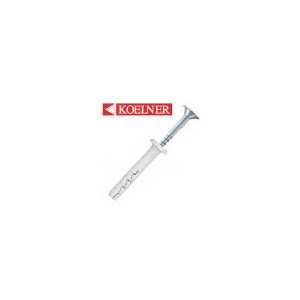
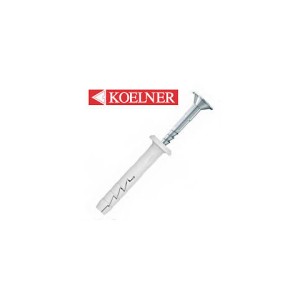
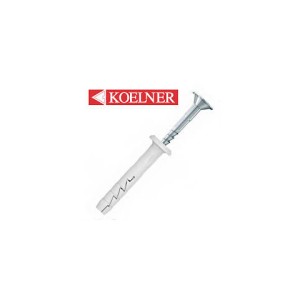
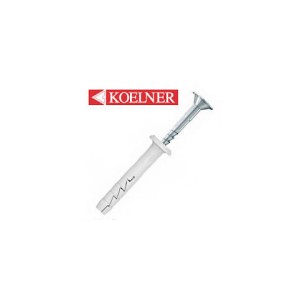
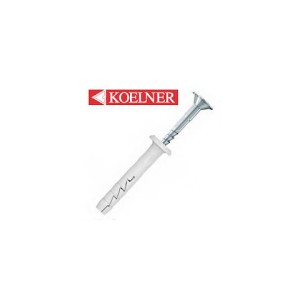
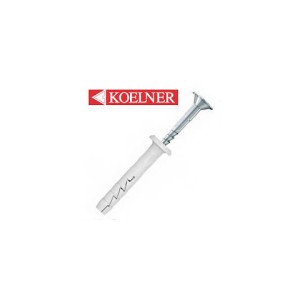
A hammer-in anchor typically consists of a high-quality nylon body and a pre-installed threaded nail (or special screw).
How it works:After drilling a hole of the appropriate diameter, the anchor and the object to be fastened are inserted together. The threaded nail is then driven in (hammered) using a hammer. This causes the end of the anchor to expand within the material, creating a secure hold.
Key benefit:Quick installation, which saves a significant amount of time on construction sites.
Intended use and suitable materials
Hammer-in anchors are versatile, but their optimal effectiveness depends on the substrate material and the load:
Solid materials (concrete, solid brick):This is their ideal application, where they perform exceptionally well. Depending on the model and diameter, they can support loads of up to 150 kg.
Hollow materials (hollow bricks, cinder blocks):Specific models are available (for example, the W-UR 14 anchor from Würth) that are suitable for these substrates, thanks to a sleeve that expands during installation.
Drywall (Plasterboard):These are used to secure lightweight items such as drywall tracks, but other types of anchors (such as Molly anchors) are often preferable for heavier loads or if the fixture needs to be removed.
Examples of applications
Fastening of battens and wooden structures.
Installation of drywall studs.
Installation of cable and pipe clamps.
Installing deck joists on a concrete slab.
All you have to do is choose the thicknesses and quantities you need!