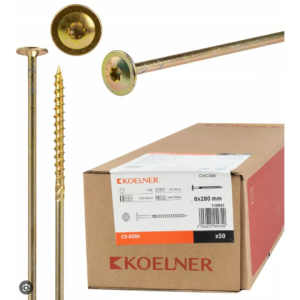
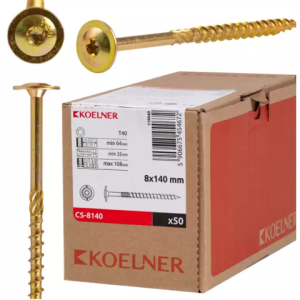
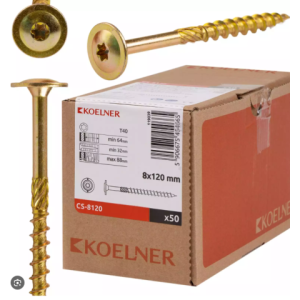
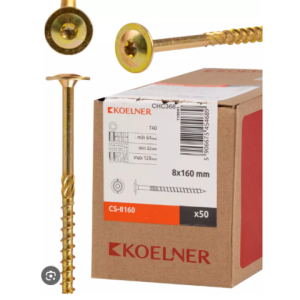
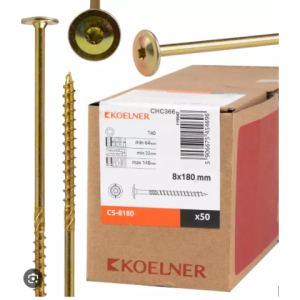
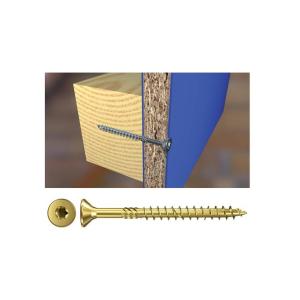
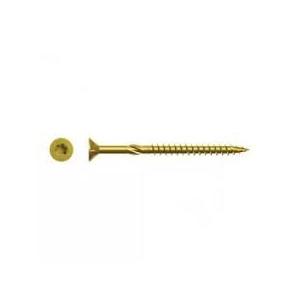
In this category, you'll find a variety of wood screws.
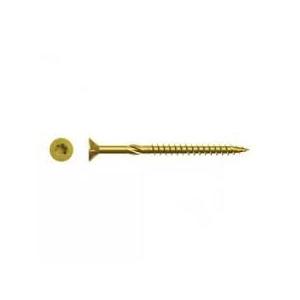
Wood screws are essential fasteners for joining wooden parts; they feature a coarse thread and, often, a countersunk head that sits flush with the surface.
Features and Types
The choice of a wood screw depends on several factors, including the type of wood (hardwood or softwood), the intended application, and the desired level of strength.
- Material:
- Steel:Highly durable, steel is ideal for structural assemblies and hardwood, as it withstands over-tightening well. It is often zinc-plated or double-chromated for better protection against corrosion.
- Stainless steel:Recommended for outdoor use (patios, siding) or in damp environments, thanks to its excellent resistance to rust.
- Brass and Bronze:Softer than steel, these materials are often chosen for their aesthetic appeal in fine woodworking or the restoration of antique furniture, offering good adhesion but less mechanical strength.
- Head:The countersunk head is the most common type, designed to sit flush with the wood. Other shapes are available, such as round, oval, or domed heads, which are used for aesthetic reasons or in specific applications.
- Drive:The drive determines which tool is needed for screwing. The most common types are:
- Split (flat):Traditional but less practical.
- Phillips (Philips/Pozidriv):Widely used because it is easy to use.
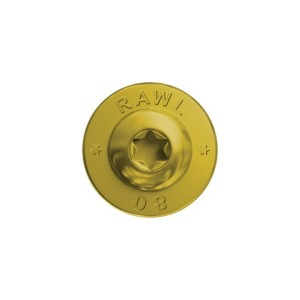
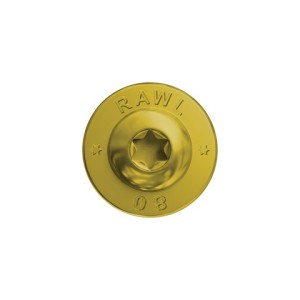
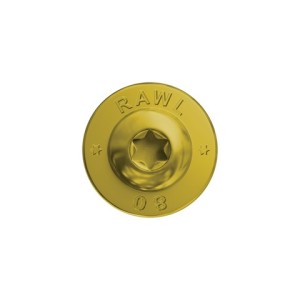
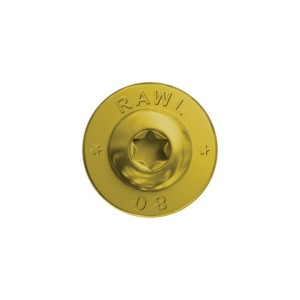
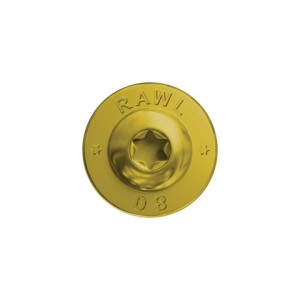
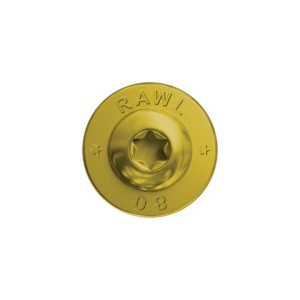
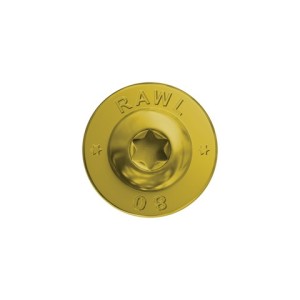
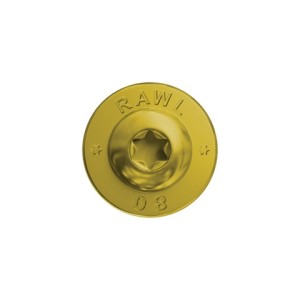
- Torx (star):Provides better control and reduces the risk of the tool slipping, which is particularly useful for tightening screws with high torque.
- Thread:
- Full-length thread:The thread runs the entire length of the screw, ensuring maximum grip between the two pieces of wood being joined.
- Partial thread:A smooth section beneath the head allows the upper part to be pressed firmly against the lower part, providing a tighter fit.
Instructions for use
For best results, especially whenworking with hardwood, it is recommended that youpre-drill the hole. The drill bit should be slightly smaller (0.5 to 1 mm smaller) than the screw diameter to ensure a secure grip without splitting the wood.
The screw should generally be long enough so that two-thirds of the thread penetrates the fixed (thicker) part, thereby ensuring a secure fastening.
All you have to do is choose the lengths, diameters, and quantities you need!